Misinformation and manipulated media are more widespread than ever before. Social media platforms, messaging apps, and video-sharing networks have become prime channels for spreading fake news, deepfakes, and misleading content. To tackle this growing threat, AI misinformation detection tools are being widely adopted to help identify and limit the spread of false information. According to a report by the Global Digital Policy Institute (2024), 68% of internet users globally are concerned about misinformation influencing their decisions.
These tools leverage advanced technologies such as deepfake detection algorithms, machine learning in misinformation analysis, and computer vision for deepfake detection to scan, analyze, and verify content in real time. In the US, platforms like Facebook and X are investing billions annually to enhance content moderation, while in India, fact-checking partnerships are expanding to combat election-related misinformation and health misinformation during crises like the COVID-19 pandemic.
This article explains what AI-powered detection tools are, why they are critical today, the technologies driving them, their challenges, and how they will shape the future of content verification across the globe.
What is Fake News Detection Software?
Fake news detection software refers to systems that use artificial intelligence, algorithms, and data-driven techniques to identify and flag misleading or false information across digital channels. These tools analyze text, images, videos, and metadata to determine the credibility of content and its sources.
Key Features:
-
Uses natural language processing (NLP) to analyze headlines and content.
-
Checks sources and links against trusted databases.
-
Detects manipulated images and videos using AI-based analysis.
-
Supports media outlets, fact-checkers, and social platforms.
Examples:
-
Hoaxy – monitors misinformation spread on social networks.
-
NewsGuard – evaluates news websites for reliability.
-
Full Fact – integrates AI plugins into media workflows for fact-checking.
Quick Takeaways:
-
Fake news detection software helps prevent the spread of misinformation.
-
It combines AI, machine learning, and human oversight.
-
Real-time alerts improve content moderation and user trust.
Learn more about AI tools for content verification.
Why Automated Fact-Checking Tools Matter in 2025
Misinformation isn’t just an annoyance—it’s a societal risk. According to the Reuters Institute Digital News Report (2025), over 54% of global internet users have encountered misinformation online within the last year, with 47% believing it influenced their opinions or decisions.
Regional Insights:
-
In the US: Automated tools are being integrated with social platforms, helping detect misinformation within seconds.
-
In Europe: Governments are developing privacy-compliant systems that ensure content moderation without restricting free speech.
-
In India: Mobile-first fact-checking apps are gaining popularity, especially in regional languages during elections and public health emergencies.
Why These Tools Matter:
-
Reduces the risk of political manipulation.
-
Protects users from scams and misleading health advice.
-
Builds trust between platforms and users.
-
Enables faster verification by newsrooms and regulators.
Case Study: A report by the Digital Trust Alliance (2024) found that platforms using automated fact-checking tools saw a 32% decrease in viral misinformation within six months.
Explore how AI is transforming media trust globally.
Key Innovations / Applications
Fake News Detection Software
Fake news detection software leverages natural language processing and sentiment analysis to scan articles, blogs, and social posts for false or misleading claims. It’s widely used by journalists and media houses to fact-check breaking news.
Example: Logically.ai, a UK-based startup, uses AI models to automatically fact-check news articles by cross-referencing verified sources.
Computer Vision for Deepfake Detection
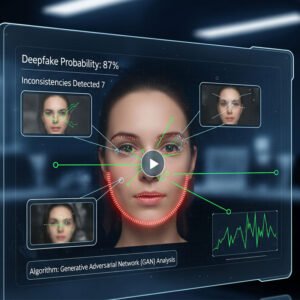 AI-driven tools spotting fake videos through facial analysis and lighting inconsistencies.
Computer vision technology examines video and image data to detect irregularities such as inconsistent lighting, altered facial expressions, or mismatched audio, helping platforms identify deepfakes before they spread.
Example: Deeptrace (now part of Sensity AI) offers real-time video scanning solutions for advertisers, broadcasters, and election monitoring teams.
Machine Learning in Misinformation Analysis
Machine learning models analyze historical patterns and user engagement behavior to predict the spread of misinformation. These systems learn from large datasets, improving accuracy over time.
Example: NewsGuard applies machine learning algorithms to give reliability scores next to news articles, helping users understand the credibility of sources.
Automated Fact-Checking Tools
Automated fact-checking tools cross-reference content with verified datasets and databases, alerting users to suspicious or false claims in real time.
Example: Full Fact, a nonprofit organization, integrates AI tools with content management systems to support broadcasters and publishers in verifying claims before dissemination.
Discover top AI fact-checking tools for media organizations.
Challenges and Ethical Concerns
AI-powered misinformation detection tools are powerful but not without challenges. Experts and users alike are raising concerns around fairness, privacy, and transparency.
Key Issues:
-
Algorithmic Bias – AI trained on incomplete datasets may unfairly target specific groups or topics.
-
Privacy Risks – Fact-checking tools may access sensitive user data, raising ethical questions.
-
False Positives – Satire, humor, or opinion pieces may be flagged as misinformation.
-
Lack of Transparency – Users may distrust automated systems if decision-making processes aren’t clear.
Dr. Aditi Rao, a leading AI ethics expert, explains, “For AI to be trusted, it must be accountable, unbiased, and explainable. Fact-checking systems should incorporate oversight and community feedback loops.”
A Pew Research survey (2025) shows that 61% of users support automated detection tools, but 72% want transparency in how decisions are made.
Read more about ethical AI challenges in content moderation.
The Future of AI Misinformation Detection Tools
The next decade promises significant advances in AI-driven content verification.
Key Trends (2025–2030):
-
Market Growth – The industry is expected to reach $5.8 billion by 2027 (IDC report).
-
Human-AI Collaboration – Hybrid systems that blend machine learning with human fact-checkers for improved accuracy.
-
Regional Customization – Localized solutions tailored to language, culture, and political context.
-
API Integration – Fact-checking embedded into messaging apps, browsers, and video platforms for seamless user experience.
Regional Outlook:
 Mapping how AI fact-checking solutions are deployed worldwide to combat misinformation.
-
In the US: Fact-checking tools may soon be integrated at the browser level for real-time alerts.
-
In India: Regional-language fact-checking tools will help combat misinformation in elections and healthcare.
-
Globally: Collaborative frameworks will set standards for misinformation detection across platforms and borders.
Learn how AI is shaping the future of digital safety.
FAQs on AI Misinformation Detection Tools
Q: Will AI help in AI misinformation detection tools?
A: Absolutely. AI improves detection by analyzing patterns, metadata, and user interactions that humans can’t easily monitor, providing faster and more accurate fact-checking.
Q: How do deepfake detection algorithms work?
A: They use computer vision and signal analysis to detect irregularities in facial expressions, lighting, and audio, helping identify manipulated videos.
Q: Are automated fact-checking tools fully reliable?
A: They’re highly efficient but not perfect. Combining AI with human verification improves the accuracy of flagged content.
Q: Can fake news detection software be integrated into social media platforms?
A: Yes. APIs and plugins are already helping platforms monitor posts and videos in real time, alerting users before they share misinformation.
Q: Is machine learning in misinformation analysis biased?
A: Bias is possible if the data used to train the models isn’t diverse. Ethical frameworks, audits, and open algorithms are needed to ensure fairness.
Explore our detailed guide on AI-powered misinformation detection solutions.
Misinformation and manipulated media are among the most pressing digital threats in 2025. With tools like deepfake detection algorithms, computer vision for deepfake detection, and automated fact-checking tools, platforms can better safeguard users and maintain trust.
Actionable Takeaways:
-
Adopt AI tools that combine machine learning with human oversight to detect misinformation more accurately.
-
Prioritize transparency and fairness to build trust in automated fact-checking systems.
-
Collaborate with experts and fact-checking organizations to stay updated with evolving threats and best practices.
Stay ahead of trends in Technology for Fundraising Trends. Subscribe to our newsletter for insights, and explore brand partnerships or sponsored content opportunities to position your company at the forefront.